

Designation: Research Scholar, JNU
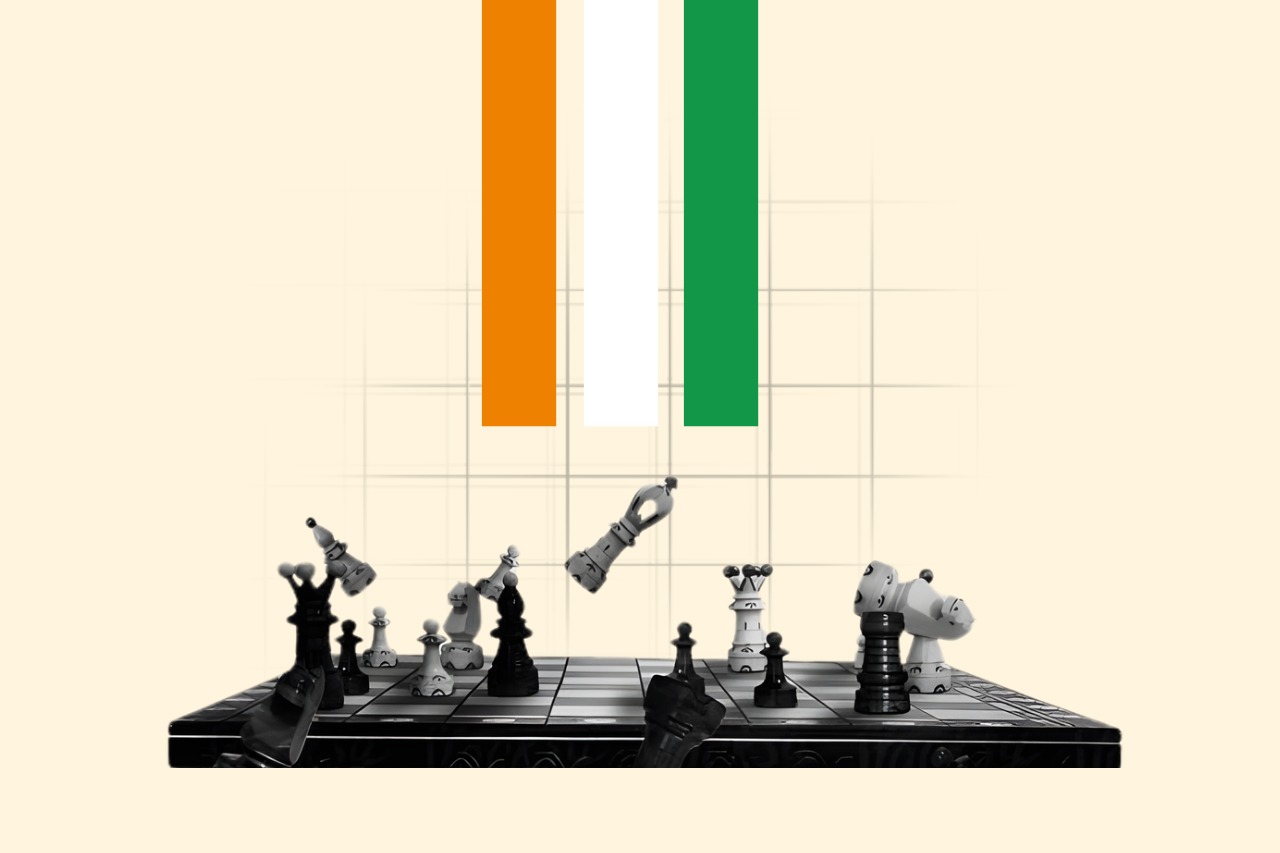
Use of sports for soft power and diplomacy is not something new. Be it democracies or dictatorships, all kinds of governments have used the unique power of sports to reach to the masses and increase their popularity not only among domestic audiences but also in the international arena. With time, the phrase ‘sports diplomacy’ has become an important part of the lexicon of international arenas. Hosting of mega-sporting events like Olympics and FIFA World Cups is a well-known exercise in soft power and sports diplomacy. However, history has shown that in the field of soft power and sports diplomacy, the not-so mega sporting events like chess also hold great potential. When the American Bobby Fischer met the Russian Boris Spassky for the World Championship title at Reykjavik in 1972, it seemed like that the Cold War was being fought on a chessboard. Spassky’s loss to Fischer meant that the domination of the Soviets in the chess world was broken after 24 years. For the Americans, this win by Fischer meant a victory of the capitalist west over the communist east. But for the Soviets, it was a loss of prestige and consequently, they increased their efforts to gain ascendancy in this arena of soft power.
A somewhat similar story is unfolding in 2025 in the Indian chess circles. In today’s increasingly polarised world, the rise of India in chess has come at exactly the right time. Brilliant performances by Indian players in tournament after tournament are a perfect harbinger of the realisation of the often-ignored potential of chess as a tool of sports diplomacy.
Chess was invented in India in the 6th century AD as chaturanga. It means “four arms” in Sanskrit. It represented military strategy and was seen as a test of intellect. However, it is interesting that despite being the birthplace of chess, India did not dominate the chess world, neither there were players who were household names which logically should have been the case. It was not until 1988 when the teenaged Viswanathan Anand won the Shakti Finance International Chess Tournament and became India’s first-ever chess Grandmaster (GM). This was a turning point in the Indian chess history which started a chess revolution in India. Slowly, chess began to be talked more about. When in 2000, he won the FIDE World Chess Championship, the interest in chess in the country dramatically increased. Chess also began to be promoted in schools and households as a way of sharpening the mind. In addition to that, the long-term impact which Anand’s rise and subsequent world championship victories created was that chess began to be seen as a career option for the budding chess players. This helped in the increase in the number of sponsorships and tournaments for players, thereby creating a virtuous cycle in the field. The early 2000s saw the rise of Koneru Humpy who became a GM at the age of just 15 years old. She won multiple tournaments in different formats and thus showed a way to the aspiring girls and women aiming to make chess more than a hobby.
Cut to today, we are experiencing a new wave of chess passion in India fuelled by prodigies like D. Gukesh, R. Praggnanandhaa, Arjun Erigaisi, Divya Deshmukh among others. Gukesh in 2024, became the youngest-ever undisputed world chess champion at the age of 19 while Divya in 2025, won the FIDE Women’s World Cup, aged 19, and thus, became the first Indian woman to win the title. In addition to the young role models for the aspiring players to look upto, the rise of online chess platforms like Chess.com, Lichess.org, ChessBase India, Chess Gurukul and others have totally revolutionized the learning of chess in our country. They have democratised the learning of the game by quality content, puzzles as well as lessons. Amateurs and professionals alike, use these platforms to hone their game. Some of these platforms also provide an income source for the players with the various tournaments being organised on them. The rapid popularization of these platforms has also been aided by the increased online viewing hours by people during the COVID-19 pandemic and once, people were hooked, they have adopted it as more than a pastime. The live-streaming of international tournaments on YouTube has massively increased the popularity of chess in today’s day and age with hundreds and thousands of concurrent viewers and hence, chess-lovers don’t need to be in the arena to watch a GM play. Thus, it has made chess a part of the conventional sports ecosystem.
All this has led to our chess players becoming the country’s ambassadors on the global stage, thus highlighting, the potential of chess in sports diplomacy with world-class players ready to carry the flag of the nation and increase India’s global profile. India has showcased is capacity by hosting major chess tournaments like the 44th Chess Olympiad in Chennai in 2022 and the FIDE World Cup in Goa in 2025. Also, as a co-organizer of the United Nations Games in 2025, India took the lead in Chess and Yoga, thus combining, the country’s historical heritage with high-level diplomacy. Indian chess coaches are also contributing to sports diplomacy by coaching players in countries as far as Norway and Romania. On her address to the nation on the eve of Independence Day 2025, President Droupadi Murmu also highlighted India’s rising start in the chess world. She said , “Brimming with new confidence, our youth are making a mark in sports and games. Chess, for example, is now dominated by India’s youngsters like never before. We foresee transformative changes which will establish India as a global sporting power-house under the vision contained in the National Sports Policy 2025.Sports are among important indicators of excellence, empowerment and potential. A nineteen-year-old girl (Divya Deshmukh) and a thirty-eight-year-old woman (Koneru Humpy) from India were the finalists in the FIDE Women’s World Cup for chess championship.” Her name-checking of chess and the chess players is extremely important because it is clear that the government at the highest levels, recognizes the importance of chess as a crucial cog in the sporting development of the country.
In today’s divided world, a game of intellect like chess can serve as a useful backdrop for conducting peaceful diplomacy especially by a country like ours which prides itself on promoting peace, not war. India should push for the inclusion of chess in the Commonwealth Games 2030 which will be hosted in Ahmedabad. If this happens, it could serve as a springboard for taking chess to the 2036 Olympics for which Ahmedabad is hopeful to get the hosting rights. The inclusion of chess in these mega-events will surely increase its profile as a tool of soft power and sports diplomacy. The momentum has to be sustained and the players have to be continuously supported. Till the time it keeps happening, sunny days are ahead.