

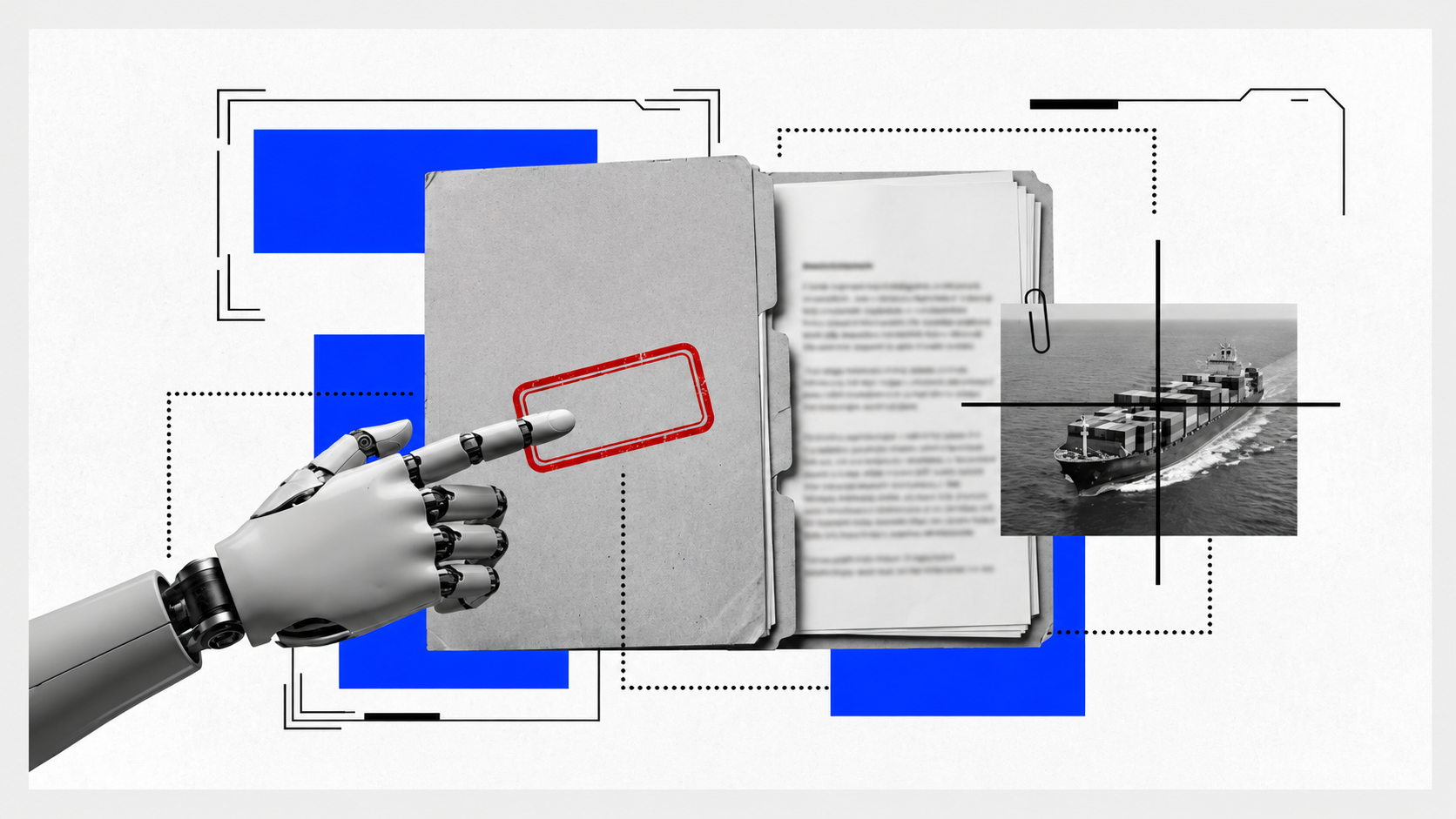
Artificial Intelligence is rapidly becoming part of national security decision-making. The growing role of AI in military security is reshaping how threats are identified, intelligence is assessed, and operational choices are made, gradually altering decision-making processes that have traditionally relied on human-led analysis and judgement. To highlight a recent case, an incident involving a Chinese vessel and a US military intelligence assessment poses a difficult question: what happens when an AI-generated assessment becomes the basis for a real-world security response?
According to CNN, a US special operations analyst used an AI chatbot to analyse intelligence concerning the manifest of a Chinese vessel travelling through the Middle East. The system reportedly misidentified the material aboard the ship and generated an assessment suggesting that it was carrying components linked to a nuclear weapons programme. The assessment was subsequently formatted into a standard intelligence report and circulated within the US military. The US military personnel began preparing to intercept the vessel, armed personnel were preparing to board it, and military aircraft were already in the air before officials examined the assessment more closely and discovered that the information was false. The incident did not result in an armed confrontation, but it highlights how an AI-generated error can manipulate information systems and alter military decision-making. Analyzing this case, the problem stems from AI hallucinations and broader concerns about cognitive warfare and decision integrity that, when false information is presented as credible intelligence, it can distort threat perception and influence decisions before the error is detected.
The AI Hallucination Conundrum
AI hallucinations are usually discussed as a technical problem- a system produces information that sounds credible, but it provides wrong information. AI hallucination is basically harmless when it is a casual chat for an individual, but for the purpose of national security, it can trigger a confrontation. The question, therefore, is not simply whether AI systems can make mistakes, but why military defense should use an AI chatbot when it is aware of the unreliability of the system. CNN reported that the chatbot combined open-source information with sensitive government intelligence to generate its assessment, which the analyst then formatted into a formal intelligence report. This raises a national security concern: AI-generated errors can acquire institutional credibility when presented as verified intelligence.
The reporting also highlights a broader institutional weakness, despite the US military’s push to expand AI adoption, the use of different systems under varying standards and the absence of a unified verification framework may leave the reliability of AI-generated intelligence uneven across the defence establishment.
The debate around military AI often focuses on autonomous weapons and whether machines should be permitted to select targets or make lethal decisions. However, the reported incident highlights a different risk that, AI can easily influence military action without controlling a weapon or making the final decision. When a flawed AI-generated assessment enters an intelligence workflow, it can shape how it perceives and interprets a threat and what actions it considers necessary. The concern, therefore, extends beyond AI safety to the integrity of the decision-making process itself.
The Speed Verification Paradox
The US defence establishment has explicitly identified speed and decision advantage as major benefits of military AI. Its 2026 Artificial Intelligence Strategy calls for accelerated AI integration across defence, including intelligence and decision support capabilities. In a crisis, it is understandable that the ability to process information and respond faster can provide an advantage. But speed creates a paradox, as the faster an institution moves from information to action, the more important verification becomes. If AI reduces the time required to produce an intelligence assessment from hours to minutes, verification systems must be capable of operating at comparable speed. Otherwise, institutions risk accelerating both good decisions and bad ones.
However, the question that arises is, when the military prioritises speed, is there enough time to check whether AI-generated intelligence is accurate? Without independent checks that keep pace with AI-enabled analysis, faster intelligence cycles may compress the time available to challenge flawed assessments, allowing errors to influence operational decisions before they are detected.
What Should Governments Build?
Governments should adopt an AI decision integrity framework to ensure the speed and scale of AI-enabled decision-making do not come at the cost of accuracy and stability. As countries integrate AI into defence and intelligence systems, the risks of flawed assessments and unchecked reliance on automated outputs extend beyond any single military. Governments should adopt an AI Decision Integrity Framework built on three safeguards: traceability of AI-generated assessments, independent verification before operational use, and heightened human oversight for decisions that risk military escalation. NATO principles and CSET research support embedding these safeguards into AI testing, training, intelligence workflows, and command protocols.
Eventually, AI-related security risks are not confined to the technology itself; they also depend on how institutions interpret and act on its outputs. As military AI adoption expands, verification and human accountability must advance alongside it to reduce the risk of errors becoming strategic miscalculations.
Conclusion
The national security implications of AI extend beyond autonomous weapons to how AI-generated assessments shape human judgement. AI can accelerate intelligence analysis, but speed alone does not guarantee accuracy. NATO’s principles of responsible AI emphasise traceability, reliability, verification and human accountability, while research by Georgetown’s Center for Security and Emerging Technology warns that AI failures can interact with human and strategic factors to increase the risk of miscalculation and escalation. The central challenge, therefore, is not simply whether AI can help governments make decisions faster, but whether institutions can distinguish verified evidence from machine-generated inference before acting on it.
In a contested information environment, a security crisis could be aggravated not only by deliberate deception, but also by an erroneous assessment accepted as fact. Decision integrity must ensure that AI accelerates analysis without bypassing the verification on which sound judgement depends.