

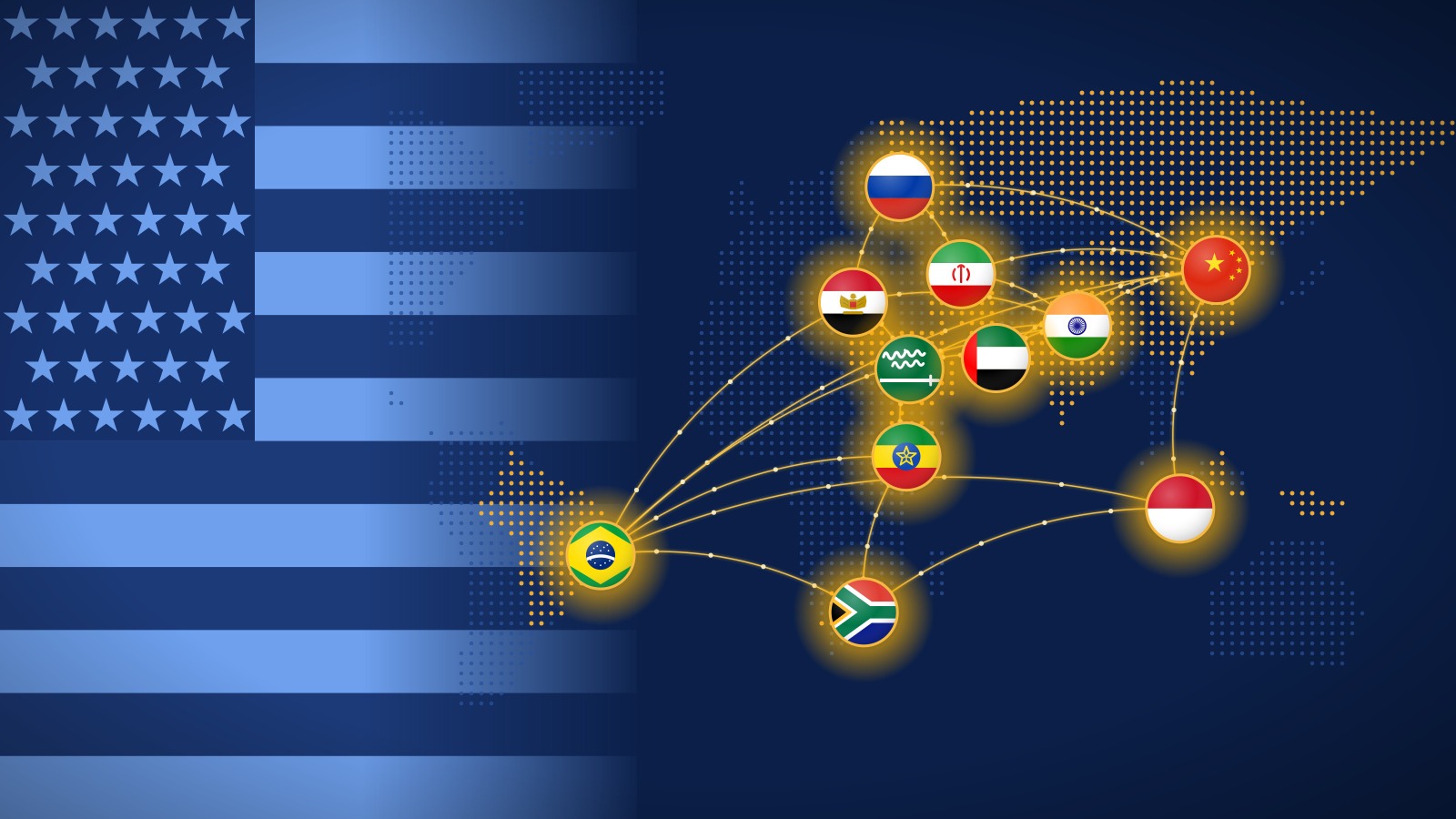
The 18th BRICS Summit came at a moment when the global economy is being pulled in several directions at once. Tariffs, trade wars, sanctions on Russia, tensions in Iran, energy insecurity, and questions about the future of the US dollar are no longer separate issues. They increasingly reinforce one another; for example, sanctions can disrupt energy trade, forcing countries to seek alternative suppliers and payment channels, while tariffs and trade restrictions can further encourage governments to diversify their economic relationships and reduce reliance on dollar-based transactions. And BRICS, now an 11-member grouping of major emerging and developing economies, sits directly at the centre of many of them. For Washington, the biggest concern is not that BRICS will suddenly replace the United States; rather, it is that the group could gradually give its members more alternatives to depending on America.
India: Can Washington Afford to Let New Delhi Drift?
Washington and New Delhi have been building closer strategic and economic ties, particularly around technology, defence and the Indo-Pacific. For Washington, India matters not only because of its growing economic and strategic weight, but also because of its role as a major partner in the Indo-Pacific and its ability to shape relationships across the Global South. At the same time, India remains deeply connected to Russia, especially through energy and defense relationships.
India’s continued purchase of Russian oil has already created friction with Washington, but New Delhi’s position is driven largely by its own economic interests. For India, affordable and reliable energy matters, particularly when global energy markets are under pressure. For example, India has developed rupee-rouble payment mechanisms with Russia that allow bilateral trade to continue without relying entirely on the US dollar. If BRICS expands such alternatives continuously, Washington would have fewer ways to use the dollar-based financial system as economic leverage.
China- The biggest economic challenge
China presents a different and far more consequential economic challenge. While initiatives such as India-Russia rupee-rouble payment mechanisms seek to reduce reliance on the US dollar in bilateral trade, China has the scale and economic weight to potentially expand such alternatives far beyond individual bilateral arrangements. BRICS offers Beijing a broader platform for deepening economic ties across the Global South. Through expanding cooperation in trade, investment, finance, and digital infrastructure, China can strengthen its economic linkages with emerging markets. A stronger BRICS could make it easier for China to expand trade using national currencies, strengthen alternative payment mechanisms, and build economic partnerships that are less dependent on Western financial institutions.
Russia and Iran: Challenging the power of sanctions
Russia and Iran are perhaps the clearest examples of why BRICS matters to Washington’s sanctions policy. Western sanctions have traditionally relied heavily on the dominance of the dollar and the global financial system built around it. But Russia has already been pushed to develop alternative payment and trading arrangements, including greater use of national currencies. India and Russia, for example, have expanded mechanisms that allow bilateral trade to take place without relying entirely on the dollar.
Iran has an even more confrontational relationship with Washington. With US sanctions and military tensions shaping its economy, Tehran has strong incentives to support financial and trade arrangements that reduce its dependence on Western systems. BRICS cannot simply eliminate sanctions, but it could make them more difficult to enforce by expanding alternative payment channels and reducing some countries’ dependence on the dollar-based financial system.
Iran already uses non-dollar channels, such as settling some oil trade with China in yuan. BRICS could expand such alternatives, reducing, but not eliminating, the reach of US sanctions.
Gulf economies: Emerging Shift in Strategy
The BRICS expansion has also brought major energy economies into the conversation. Countries such as Saudi Arabia and the United Arab Emirates have traditionally maintained important security and economic relationships with Washington. This matters because Gulf states sit at the intersection of U.S. security interests and global energy markets.
By deepening ties with China, Russia, and India while retaining Washington as a key security partner, they gain greater economic and diplomatic flexibility. This balancing act matters because energy remains one of America’s most important sources of global influence.
If major oil-producing countries become increasingly comfortable conducting trade and financial transactions through multiple currencies and systems, the long-standing centrality of the dollar in global energy markets could gradually decline. However, this does not indicate that the dollar is about to disappear. In reality, there is no immediate replacement for its enormous role in global finance. But the gradual diversification can reduce America’s economic leverage at the margins.
The real threat seems to be fragmentation, not a new currency. Much of the attention around BRICS focuses on the possibility of a new currency or a blockchain-based payment system challenging the dollar.
But the more important story may be simpler. BRICS does not necessarily need to create a single alternative currency to change the global financial system. If India trades more with Russia in national currencies, China expands non-dollar trade, Gulf economies diversify their financial relationships, and countries such as Iran build alternative payment channels, the world becomes less dependent on a single financial centre. That is a slower and less dramatic process, but potentially a more meaningful one.
The United States remains deeply embedded in the global system through its economic, technological, military and financial power. BRICS, however, is far from unified: India and China remain strategic competitors, Russia has different priorities, and Gulf states continue to maintain important ties with Washington.
The significance of the New Delhi summit, therefore, lies less in whether BRICS can replace America and more in whether it can reduce countries’ dependence on the US-led system. Its focus on local-currency trade and interoperable payment mechanisms points toward a gradual expansion of economic alternatives. BRICS may not replace the dollar, but it could make the global system less dependent on it.