

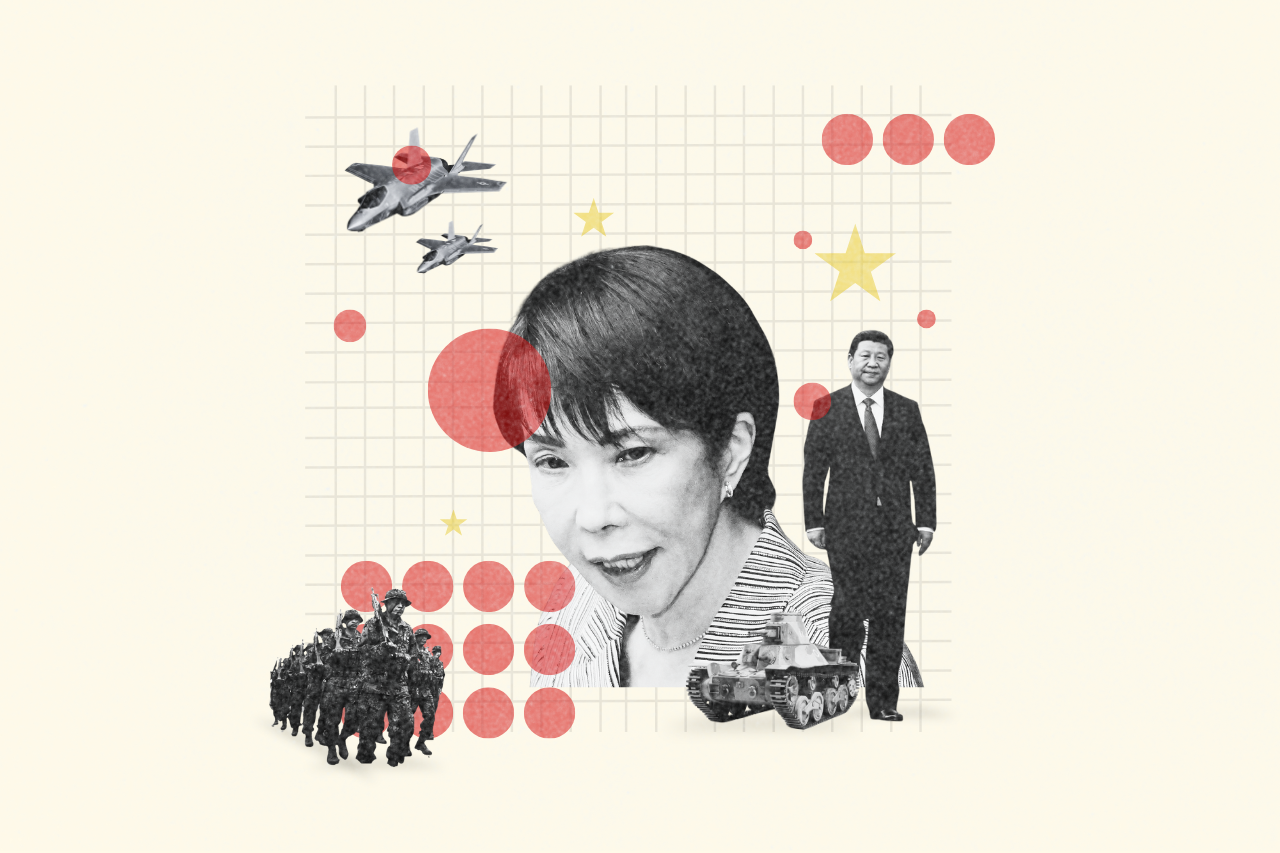
The Japanese slogan “Good Country, Great Army,” is commonly associated with the phrase Fukoku Kyohei- translated as “Rich Country, Strong Army” originated during the Meiji Restoration of the late 19th century. During this transformative period, Japan had pursued rapid modernization aimed at strengthening both its economic foundations and military capabilities. The doctrine named “Fukoku Kyōhei” served as a guiding principle for state building, enabling Japan to industrialize, centralise governance, and develop a modern military establishment capable of competing with the Western powers. Although rooted in a historical context, the essence of this slogan has not entirely lost its relevance. As in the contemporary geopolitical dynamics, echoes of Fukoku Kyohei can still be discerned in Japan’s strategic discourse as the country seeks to reassert its position within the international relations system.
A significant challenge confronting Japan in this pursuit lies in the constraints imposed by its postwar constitutional framework, particularly Article 9 of the constitution of Japan, which renounces war and limits the country’s ability to maintain traditional military forces. For decades, these constraints shaped Japan’s defence posture, restricting the scope of its security capabilities. However, during the tenure of former Prime Minister Shinzo Abe, a notable reinterpretation of the constitution was undertaken to permit the exercise of collective self-defence. This reinterpretation allowed Japan to assist allied nations under attack, thereby expanding the operational scope of the Japan self-defence Forces. Abe had repeatedly argued that Article 9 placed limitations on Japan’s sovereign right to maintain a fully functional defence force, particularly one possessing offensive military capabilities necessary for deterrence in an increasingly complex security environment.
Japan’s strategic shift and China’s Response
Under the leadership of current Prime Minister Sanae Takichi, a shift toward strategic realism has emerged in Japanese defence and foreign policy discourse. Regional security developments have significantly influenced this shift. For instance, the large-scale military parade was held in Beijing in September 2025, alongside strategic cooperation among China, Russia, and North Korea, which contributes to heightened threat perceptions among the Japanese public and political leadership. These developments strengthened domestic calls in Japan for enhanced military preparedness and regional stability through credible deterrence. Reflecting on this sentiment, the ruling Liberal Democratic Party, under Takaichi’s leadership, secured a landslide victory in the House of Representatives. Political observers have interpreted this outcome as indicative of a broader shift in Japanese political discourse toward more conservative and nationalist orientation.
Japan’s evolving defence posture is also evident in its increasing defence expenditures and technological investments. According to the draft budget which was released in December 2025, the Japanese government has plans to allocate approximately 100 yen billion toward the deployment of extensive networks of unmanned aerial, surface, and underwater drones designed for surveillance and defensive operations. This system, known as the “ Shield ” initiative, is expected to become operational by March 2028, according to officials from the Ministry of Defence, Japan. The scale of this allocation represents a significant step in Japan’s broader effort to modernize its defense capabilities and integrate advanced technologies into its security infrastructure. If sustained, such spending trajectories could position Japan as the World’s third largest defence spender.
In addition to technological modernization, the Japan’s Ministry of Defence has outlined plans to construct approximately 130 ammunition storage facilities across the country by around 2032. The development of these facilities is intended to enhance logistical readiness and ensure sustained operational capability during potential contingencies. However, these measures have not gone unnoticed by regional actors. In particular, officials in Beijing have expressed concern over Japan’s expanding defence infrastructure and military expenditures, viewing them as a threat.
The tensions between China and Japan have further intensified due to statements made by Prime Minister Takaichi regarding the security of Taiwan. Takaichi has indicated that Japan may consider military involvement if Taiwan faces an invasion by China. Such declarations align with Japan’s broader strategic concern regarding the stability of the Taiwan Strait, which holds critical importance for regional security and global trade routes. Nevertheless, these statements have exacerbated diplomatic frictions between Tokyo and Beijing, adding another layer of complexity to an already delicate regional security environment.
In this context, Japan’s evolving policy on defence and security can be interpreted as an attempt to reconcile historical constraints with contemporary strategic realities. While the spirit of Fukoku Kyohei once symbolized Japan’s modernization drive during the Meiji era, its conceptual echoes now resonate within contemporary debates about national security, regional stability, and Japan’s role in the international order. Whether this transformation will successfully restore Japan’s status as a major strategic actor or further intensify regional rivalries remains a critical question.
For decades, Japan’s security posture was shaped by the pacifist principle embedded in Article 9 of the Constitution of Japan, which limited the country’s ability to maintain conventional military capabilities. However, growing regional tensions particularly the expansion of China’s strategic influence and recurring missile threats from North Korea have pushed Tokyo to reconsider the viability of a pacifist security framework in today’s geopolitical environment.
Historical Memory and Contemporary Security Dynamics
Beyond military considerations, the rivalry between Japan and China is also unfolding in the economic domain. As observed, Beijing has frequently employed economic pressure as a strategic instrument in diplomatic disputes . A recent example emerged when China imposed export restrictions on several Japanese firms that it alleged were contributing to Tokyo’s military expansion, which escalated tensions between both the countries. These measures targeted exports of “ dual-use ” items goods that can serve both civilian and military purposes to around twenty Japanese entities, including subsidiaries of Mitsubishi Heavy Industries and Japan’s national space agency, the Japan Aerospace Exploration Agency.
The Chinese Ministry of Commerce placed approximately twenty other Japanese organizations, including automobile manufacturer Subaru Corporation, on a monitoring list that requires stricter export reviews for sensitive items. Chinese exporters engaging with these entities are now required to submit detailed license applications and risk assessments, along with a declaration that the exported materials will not be used for military purposes. Beijing has justified these measures as legitimate actions intended to curb what it characterises as Japan’s “remilitarization” and potential nuclear ambitions.
Chinese policy analysts and state aligned media have framed this restriction within a broader narrative of regional security concerns. Commentaries from outlets such as China Daily, and Global Times have asserted that Japan exaggerates external threats in order to justify expanding its military capabilities. Some commentaries further claim that Tokyo’s security discourse often emphasizes “survival” and ‘self-defence” risks mobilizing public support for a return to militaristic policies reminiscent of the era of the Imperial Japanese Army. Such narratives reflect China’s longstanding objection towards Japan’s military normalization, shaped in part by historical memory of wartime atrocities during the early twentieth century.
Conclusion
Lingering historical tensions continue to affect Sino-Japanese relations. The legacy of Japanese imperial expansion remains deeply embedded in Chinese political discourse, and Japan’s efforts to expand its defence capabilities often raise fears in Beijing about a possible revival of militarism. However , the strategic environment of the 21st century differs greatly from that of the post-WWII era, as the Indo-Pacific now faces shifting balance of power, technological competition and increasing geopolitical rivalry.
Japan must seek to strengthen its alliances and domestic capabilities and try to move away from its continued security reliance with the United States. Tokyo must also focus on expanding its security cooperation with partners such as Australia and the Pacific islands to increase its presence in the Pacific region. Its participation in the Quadrilateral Security Dialogue will further reflect its commitment to maintaining stability in the Indo-Pacific through the vision of a Free and Open Indo-Pacific. Japan also must strive to enhance economic resilience by diversifying supply chains and strengthening trade partners, which will become an important component to mitigate the risks of economic coercion.
To conclude, Japan faces the complex task of balancing economic growth with the expansion of its military capabilities in order to adapt to an increasingly volatile security landscape. A comparable moment of strategic recalibration occurred in Europe following Russia’s invasion of Ukraine in February 2022. In response, German Chancellor Olaf Scholz announced a historic national turning point “ Zeitenwende .” signaling a fundamental shift in Germany’s security policy. This recalibration was accompanied by a commitment of €100 billion to strengthen the country’s military capabilities and marked a departure from decades of restrained defence policy.
In many ways, Japan appears to be experiencing a similar strategic reassessment. Faced with shifting regional dynamics and growing security concerns in East Asia, Tokyo is gradually revisiting elements of its historical strategic thinking, echoing earlier doctrines that linked national prosperity with military strength. However, Japan’s evolving defence posture also brings a critical challenge: strengthening its security capabilities while simultaneously building trust among neighboring states that remain sensitive to the legacy of the past.
Ultimately, Japan’s recalibration reflects the broader dilemma of reconciling its post-war pacifist identity with the demands of an increasingly competitive international order. As geopolitical tensions intensify in the Indo-Pacific, Tokyo’s efforts to expand defence capabilities, reinforce alliances, and sustain economic resilience will likely play a decisive role in shaping the region’s evolving balance of power.