

INTRODUCTION
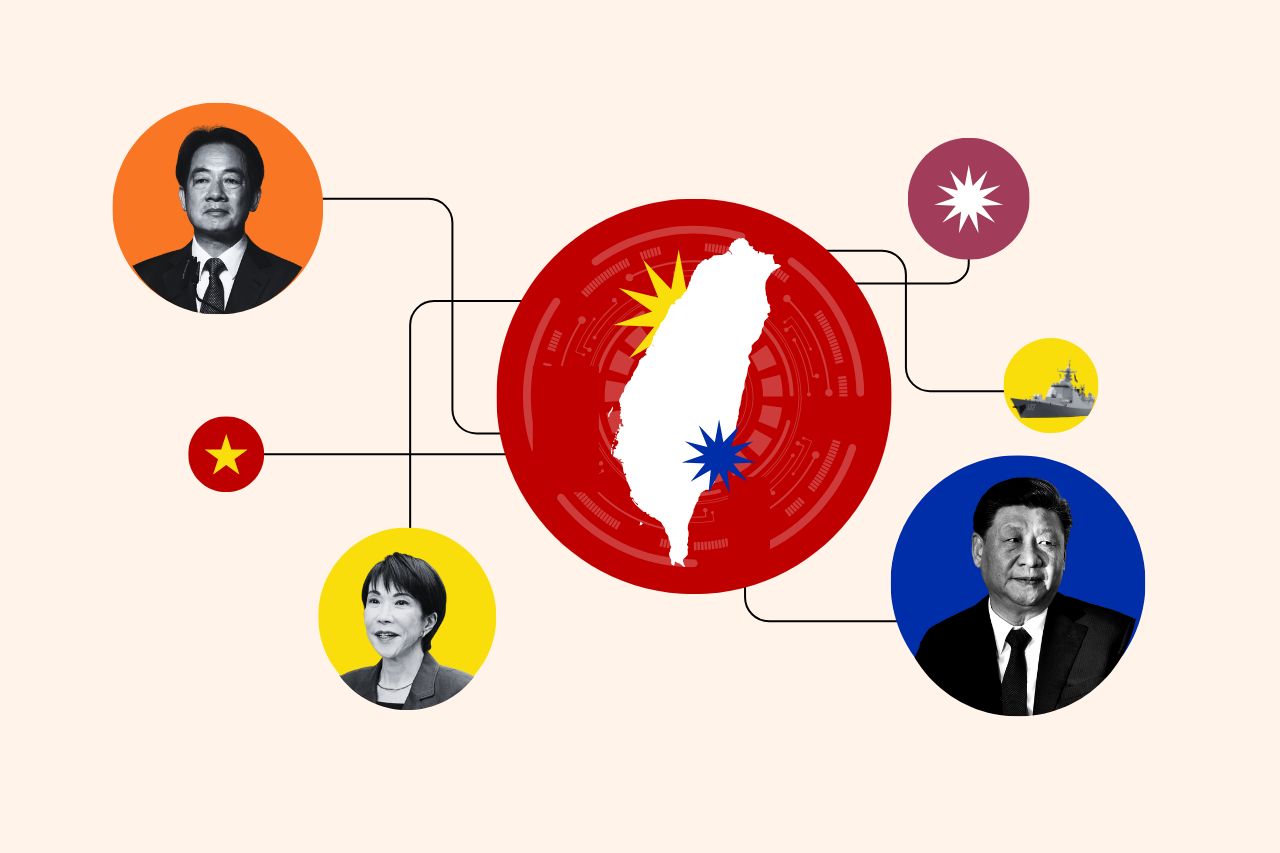
The relationship between China and Japan has long been marked by complexity, much of it rooted in the legacy of wartime atrocities committed during WWII. This historical backdrop continues to shape contemporary diplomatic tensions. As evident, a new wave of friction emerged after Japan’s recently appointed Prime Minister, Sanae Takaichi, delivered her initial parliamentary speech in October.
Prime Minister Sanae Takaichi, the country’s first woman to hold the Prime ministership, has been widely speculated to uphold the policy trajectory established by former Prime Minister Shinzo Abe. Her conservative orientation is reflected in her views on security strategy, constitutional reform, and economic policies. She indicated that Japan might consider a military role in a potential confrontation between China and Taiwan. Her remarks suggested that Tokyo could invoke its right to collective self-defence, arguing that Japan must be prepared for “the worst-case scenario” in the Taiwan strait, and a Chinese assault on Taiwan could pose a “survival-threatening situation” for Japan. She argued that a blockade of Taiwan, given its proximity to Japan and its importance to key shipping lanes, could pose such a threat.
GEOSTRATEGIC PIVOT
Geographically, Taiwan lies at the heart of the “first Island Chain,” a strategically located sweeping arc from Japan through Taiwan to the Philippines that forms a natural maritime boundary separating the Asian Mainland from the Pacific Ocean and a buffer that helps prevent unfettered PLA naval access into the western Pacific. From Japan’s perspective, Taiwan occupies a central position in the security of its Sea Line of Communication (SLOCs) and the operational freedom of its navy. The persistence of PLA patrols in the East China Sea, regular exercises near Japan’s southwest Islands, and concurrent operations in the Sea of Japan highlight the growing complexity of the security environment Tokyo faces. Much of Japan’s commercial and military maritime traffic passes through waters near Taiwan, meaning instability or coercive control in this area would directly endanger Japan’s economic lifeline.
BEIJING’S ZERO-TOLERANCE POLICY
Beijing’s response to Prime Minister Takaichi’s remarks was severe. Chinese Foreign Minister Wang Yi accused Japan of “crossing a red line”. China remains highly cognizant of third-party involvement in matters concerning Taiwan, for instance, during the 2022 visit of US House Speaker Nancy Pelosi to Taipei, which Beijing regarded as a deliberate political provocation. Despite explicit warnings, Pelosi’s visit aimed to reaffirm US support for Taiwan. China expressed its displeasure through sharply worded statements, direct warnings to President Joe Biden not to “play with fire”, and extensive military exercises around Taiwan, including multiple ballistic missile launches by the PLA Rocket Force.
China’s reaction to Takaichi’s comments followed a similar trajectory. Beijing issued strong diplomatic protests, advised its citizens against travelling to Japan, suspended imports of Japanese seafood, and postponed a scheduled trilateral meeting of cultural ministers with Japan and South Korea. Adding to the escalating rhetoric, China’s consul general in Osaka reshared coverage of Takaichi’s parliamentary remarks on X, supplementing it with his own inflammatory comment that “the dirty head that sticks itself in must be cut off.” Such statements illustrate Beijing’s increasingly assertive posture on the Taiwan issue.
China, which considers Taiwan part of its sovereign territory and has not excluded the use of force to achieve unification, demanded a retraction of what is described as “egregious” comments by Takaichi. Takaichi, however, refused to withdraw her remarks, asserting that they were fully consistent with Japan’s long-standing policy position.
TAIWAN’S RECIPROCAL SUPPORT FOR JAPAN
In 2021, following Beijing’s decision to halt imports of Taiwanese pineapples, Japan demonstrated economic and political solidarity by purchasing a record 19,000 tons of the fruit. The gesture assumed additional symbolic weight when then Prime Minister Shinzo Abe, political mentor to the current Prime Minister, Sanae Takaichi, publicly posed with a Taiwanese pineapple.
Taiwan has recently sought to reciprocate this support. The government in Taipei has removed all remaining restrictions on Japanese food imports, including seafood items that had been subject to controls since the 2011 Fukushima nuclear disaster. To signal this policy shift, President Lai Ching-te released a video video in which he is seen eating sushi prepared with Japanese scallops. Beijing criticised the move, interpreting it as an endorsement of Takaichi’s pro-Japan stance.
CHINA SPURS MILITARIZATION
Under Xi Jinping, the Chinese Communist Party (CCP) has increasingly grounded its political legitimacy in the invocation of its “glorious history,” using historical narratives to legitimise its continued claim to rule. Since 2019, Xi has repeatedly stressed that China’s historic mission to reclaim Taiwan is closely tied to reunification, his broader objective of “national rejuvenation”.In this framing, Taiwan is not merely a territorial issue but a core component of the CCP’s political credibility. Accordingly, Beijing signals that any form of external involvement in the Taiwan question will be met with strong resistance.
Deteriorating China-Japan relations have raised security concerns in Tokyo, leading to substantial changes in Japan’s Defence planning. In response to the evolving threat environment, the Japanese cabinet has approved a supplementary budget for Fiscal Year 2025 intended to put the country on course to allocate more than two per cent of its GDP to defence, a substantial shift in national security posture. According to the Ministry of Defence (MOD),which is to receive 842.7 billion yen, the remainder of the 1.1 trillion-yen package is directed to the Japan Coast Guard and other agencies involved in security-related operations. The deployment of the Type 03 medium-range surface-to-air missile system on Yonaguni Island, located near Taiwan, was seen as a major step by Japan to ensure regional stability, as emphasised by Defence Minister Shinjiro Koizumi , who said it is purely defensive and designed to protect both military and civilian facilities.
These developments reflect broader regional dynamics, as several Southeast and East Asian countries, such as the Philippines, Singapore ,andThailand , have increased their defence budgets, raising concerns about a potential arms race. On Chinese social media platforms such as X, state-affiliated media have portrayed Prime Minister Sanae Takaichi as reviving Japanese Militarism. Meanwhile, the Liberal Democratic Party’s new policy chief, Kobayashi Takayuki 2% of GDP isnowhere near enough ,” signalling the likelihood of even more ambitious defence spending in the future. Given the nuclear capabilities of North Korea and China. Japanese policymakers face the challenge of balancing deterrence with their long-term commitment to nuclear disarmament. Therefore, Japan is compelled to adopt a pragmatic dual-track approach , pursuing practical security measures while continuing to support global non-proliferation norms.
China’s pressure on Japan spans economic, diplomatic, and military domains. Most recently, on 6 December, Tokyo filed a formal protest after a Chinese military platform allegedly directed fire control radar at a Japanese aircraft, an action that can be regarded as escalatory. Although Japan’s postwar constitution renounces the use of force to resolve international disputes, a 2015 reinterpretation under then Prime Minister Shinzo Abe expanded Japan’s ability to engage in limited collective self-defence in certain circumstances. However, Prime Minister Takaichi vowed to “respond calmly and resolutely,” emphasising enhanced air and maritime surveillance and heightened monitoring of Chinese military activity.
CONCLUSION
The incident places Takaichi under considerable domestic and international scrutiny, challenging her ability to manage pressure from Beijing while maintaining public confidence at home. Her political task remains to project resolve without precipitating confrontation, thereby preserving Japan’s long-standing commitment to peace and nuclear deterrence. This will test both the resilience of Sino-Japanese relations and Takaichi’s capacity to maintain strategic composure amid rising geopolitical tensions.